
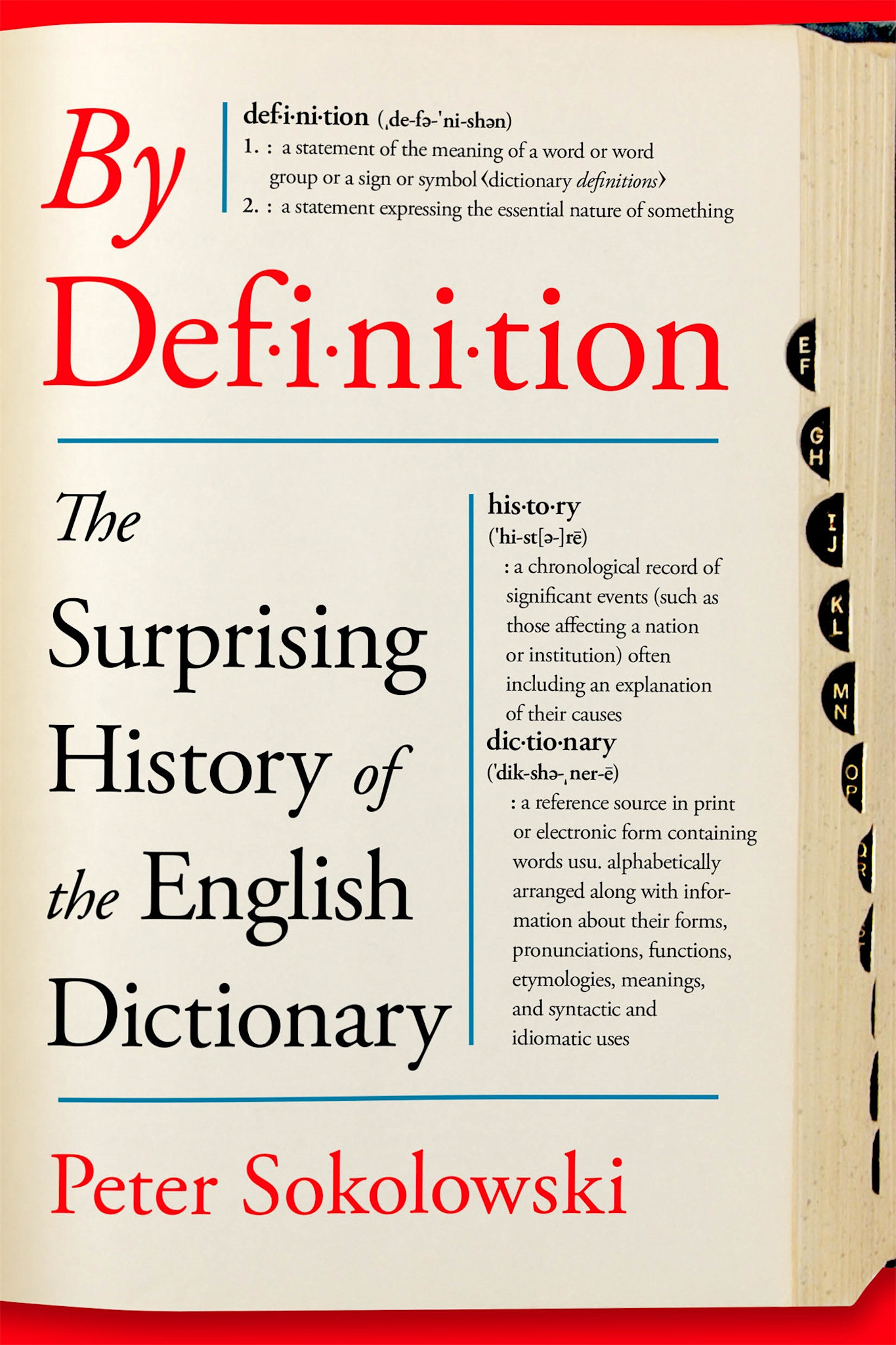

By Definition: The Surprising History of the English Dictionary
By Peter Sokolowski
$30.00
Add to wishlist
/
Add to compare
Publication Date: February 23, 2027
| Availability: | Out of stock, but more on the way Pre-orders ship after the publication date. |
A veteran Merriam-Webster editor celebrates the world’s biggest language through the dictionary
In this engaging narrative lexicographer Peter Sokolowski uncovers the history of our language in the dictionary definitions written from Shakespeare’s time to ours. English is always changing. And so our dictionaries present a paradox; they represent stability and standards but they also constantly add new usage and words (and discard some old ones). The dictionary is the story of the way we express culture, authority, and identity with our words.
We haven’t always had dictionaries. In Renaissance England, explaining the meanings of words meant translating the Latin of the Church and the French of the Norman bureaucracy. A linguistic class system separated these “hard words” of privilege, prestige, and power from the native English words of hearth and home. Thus, the most common words in English were not given definitions in dictionaries until the mid-18th century.
Dictionaries developed as the language grew, and definitions by British Samuel Johnson and American Noah Webster are compared through Sokolowski’s close readings, which take us through the creation of the Oxford English Dictionary and into current online references. He answers questions like Is irregardless a word? Does literally have only one meaning? And what are users looking up today? Full of fun examples, and peeks into the mysterious world of dictionary creation, this book will delight word lovers of every kind.
About the Author
No reviews yet. Be the first to write a review.