
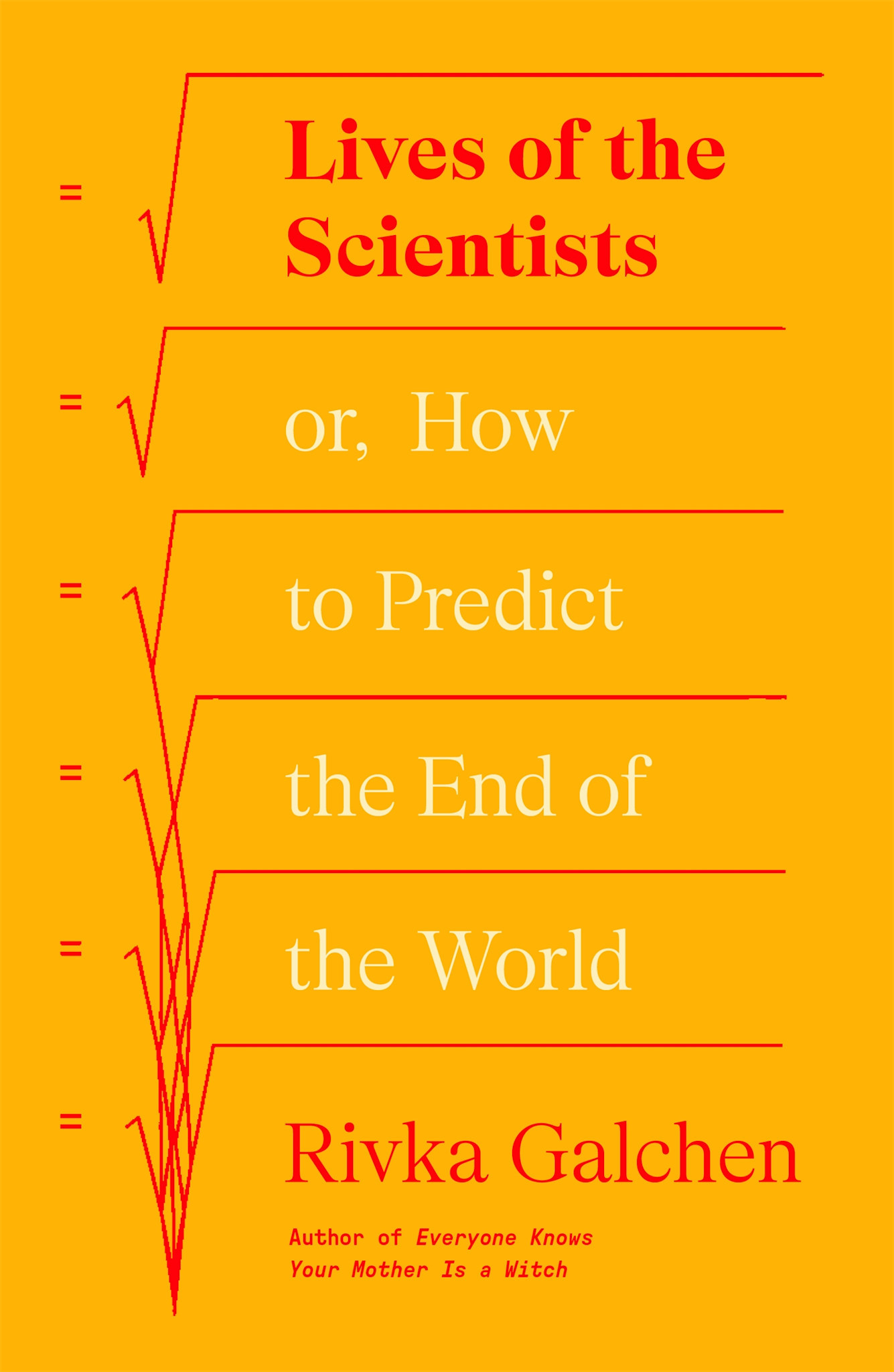

Lives of the Scientists: or, How to Predict the End of the World
By Rivka Galchen
$29.00
Add to wishlist
/
Add to compare
Publication Date: April 20, 2027
| Availability: | Out of stock, but more on the way Pre-orders ship after the publication date. |
One of our most brilliant, acclaimed novelists turns to nonfiction with a mind-expanding, slyly humorous personal exploration of the scientific imagination.
In Lives of the Scientists: or, How to Predict the End of the World, Rivka Galchen offers a profound and playful exploration of the lives of scientists, the persistence of error, and the quixotic faith required to make sense of a turbulent reality.
Galchen’s father—a spacy, otherworldly meteorologist—sends her a box containing two oversize T-shirts (one with the image of Shakespeare, the other of Einstein) and a copy of Don Quixote. The riddle of the gift, received only weeks before his death, becomes the catalyst for a journey into the minor mysteries of individual lives. We encounter the tragic genius of Nikolai Vavilov, who sought to conquer famine only to die of starvation in a Soviet prison; the eccentric Lewis Fry Richardson, who imagined a "forecast factory" of 64,000 human computers to predict both weather and war; and Ignaz Semmelweis, the doctor who discovered that washing hands could save lives, only to be dismissed as a madman by his peers. Science, Galchen discovers, is much like the knight-errantry of Don Quixote: a fantasy that works back to improve the reality we are trying to evade.
With the precision of a poet and the imagination of a scientist, Galchen bridges the gap between the "scuffle of the small" and the cosmic scale of the universe. Part memoir, part history, part political meditation, Lives of the Scientists offers a much-needed antidote to the blue light of our smartphones and their endless scroll of bad news.
About the Author
No reviews yet. Be the first to write a review.