
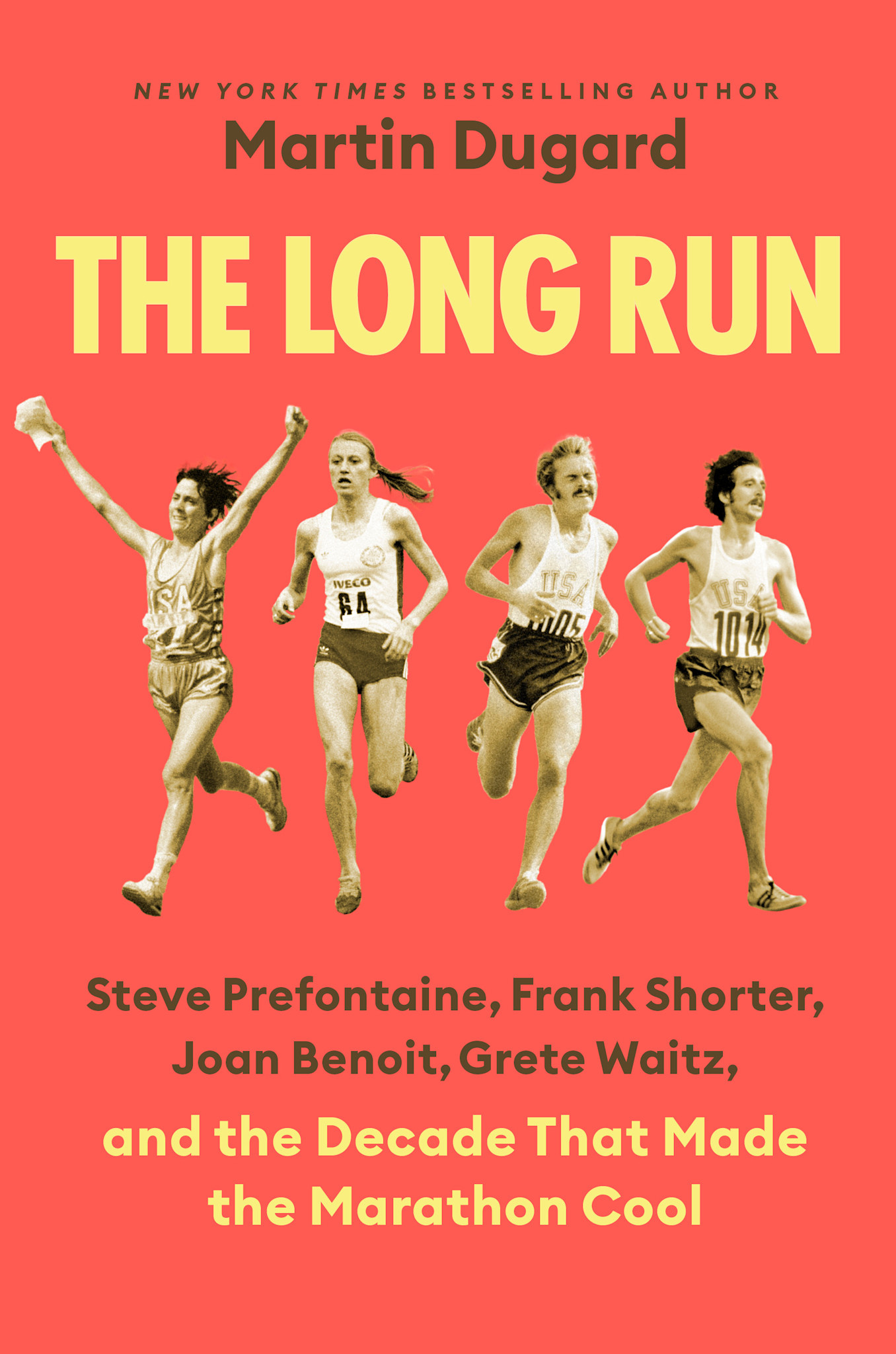

The Long Run: Steve Prefontaine, Frank Shorter, Joan Benoit, Grete Waitz, and the Decade That Made the Marathon Cool
By Martin Dugard
$32.00
Add to wishlist
/
Add to compare
Publication Date: April 14, 2026
| Availability: | On our shelves now |
A dramatic narrative that tells the story behind the running and marathon boom of the 1970s and early 1980s, featuring the stories of Steve Prefontaine, Frank Shorter, Joan Benoit Samuelson, Grete Waitz, and how they turned a formerly obscure race into a national obsession.
On September 3, 1970, the New York City Marathon was ran for the first time. 127 runners paid a $1 fee, and the race was won by a Long Island firefighter who came to the starting line straight from his overnight shift. Only one woman ran, and all but one of the runners was a New York resident.
54 years later, nearly 50,000 runners finished the same race. More than three times as many runners applied, and over 2 million spectators watched. Runners from all over the world run the NYC Marathon, and many others like it, today. Marathons are hugely popular, incredibly inclusive, and fully global.
How did we get from there to here? As Martin Dugard, long-time runner, running coach, and board member at USTAF explains, it was thanks to the twelve years that followed, and four very special runners, that changed the way America, and the world, saw running. The Long Run will celebrate those four athletes—Frank Shorter, Steve Prefontaine, Joan Benoit Samuelson, and Grete Waitz—and the specific races that transformed running from a niche sport to a national obsession.
Through exciting races, fascinating stories, and including terrible tragedies (both Prefontaine and Waitz died young), The Long Run will reveal how the sport, and the race, that we all know and love became iconic.
On September 3, 1970, the New York City Marathon was ran for the first time. 127 runners paid a $1 fee, and the race was won by a Long Island firefighter who came to the starting line straight from his overnight shift. Only one woman ran, and all but one of the runners was a New York resident.
54 years later, nearly 50,000 runners finished the same race. More than three times as many runners applied, and over 2 million spectators watched. Runners from all over the world run the NYC Marathon, and many others like it, today. Marathons are hugely popular, incredibly inclusive, and fully global.
How did we get from there to here? As Martin Dugard, long-time runner, running coach, and board member at USTAF explains, it was thanks to the twelve years that followed, and four very special runners, that changed the way America, and the world, saw running. The Long Run will celebrate those four athletes—Frank Shorter, Steve Prefontaine, Joan Benoit Samuelson, and Grete Waitz—and the specific races that transformed running from a niche sport to a national obsession.
Through exciting races, fascinating stories, and including terrible tragedies (both Prefontaine and Waitz died young), The Long Run will reveal how the sport, and the race, that we all know and love became iconic.
About the Author
No reviews yet. Be the first to write a review.